 CompromessoCheck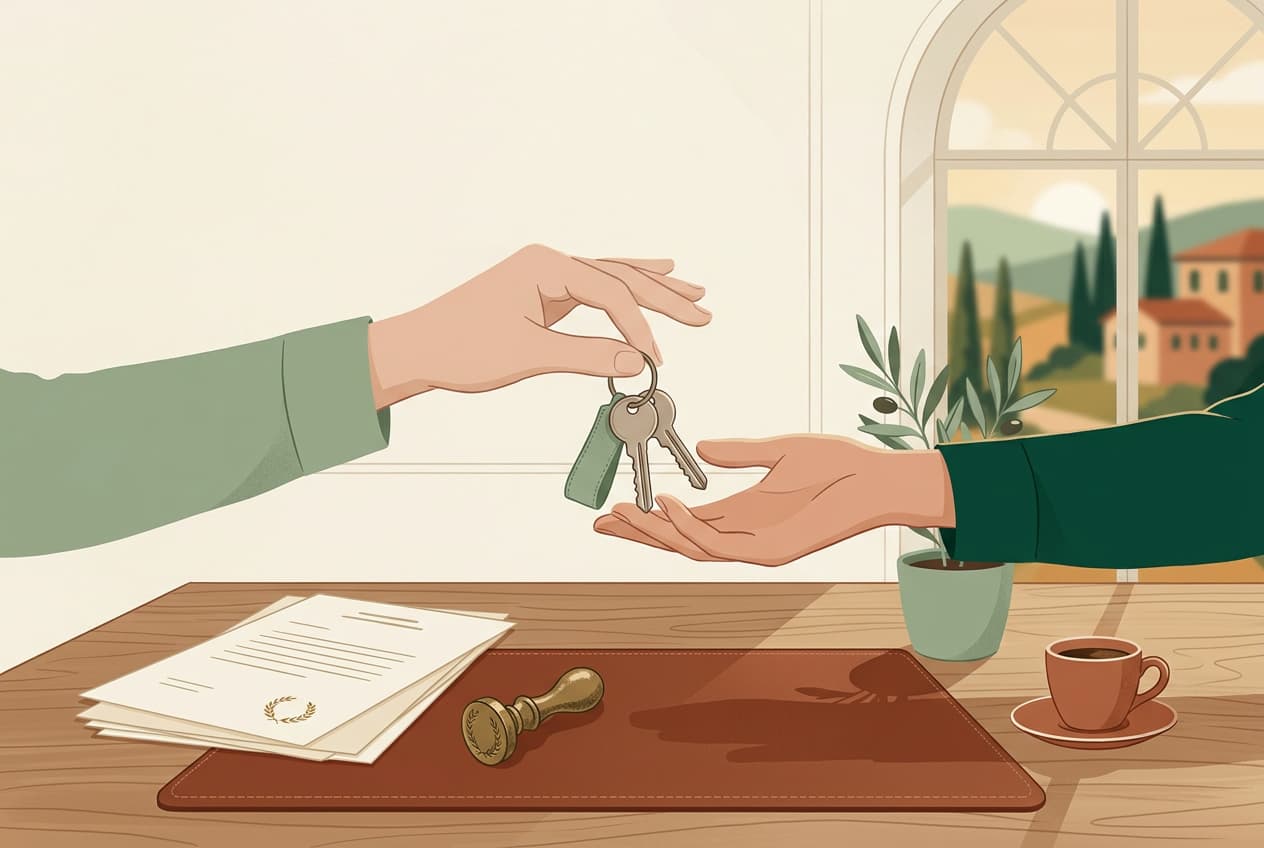
Guides · Updated 2026-08-04
The rogito: what actually happens on closing day in Italy
The rogito (atto di compravendita) is the appointment where ownership actually changes hands: everything before it was preparation. It typically takes one to two hours at the notary's office. Here's the play-by-play, so nothing on the day surprises you.
Who's in the room
The notary (an impartial public official — by custom chosen and paid by you, the buyer), the seller, you or your attorney with a procura, usually the agent, sometimes the banks. If you don't understand Italian and sign personally, add a sworn interpreter or a bilingual deed — arranged in advance, not that morning.
What the notary does
Before the date, the notary runs the formal checks: ownership chain (20 years back), mortgages and liens, cadastral conformity declarations, permits, pre-emption rights. At the table, the deed is read aloud — integrally, by law — and explained. This is your last, best moment to ask questions: use it.
Money moves at the table, almost always by cashier's checks (assegni circolari) or pre-arranged transfers, itemized in the deed. If anything about the property must still be fixed (a mortgage to cancel, condo arrears), the notary can hold sums in escrow (deposito prezzo) — ask for it whenever something is pending.
What you walk out with
The keys, a certified copy of the deed (the registered copy follows after trascrizione), and the notary's invoice. The notary then registers and transcribes the deed and pays the purchase taxes with the funds you provided. Utilities, condo administrator notification and residence (if you're claiming prima casa) are your follow-ups in the days after.
Three things to verify before you sit down
One: the draft deed (bozza) — ask for it days in advance and read it; changes at the table are possible but awkward. Two: the exact figures — price, taxes, notary's bill, agent's balance, all itemized, no surprises in the room. Three: the property's condition — do a final walk-through as close to the rogito as possible; the deed says you accept the state it's in.
The draft deed is a document like any other: you can upload it to our analysis and walk into the notary's office already knowing every clause. It's the cheapest peace of mind of the whole purchase.
Have the document in hand? Don't guess.
Upload your compromesso, proposta or visura and get a plain-English report — clause by clause, with the risks ranked — in about a minute.
Analyze my document — from $39Or see a sample report first.
Related guides
This guide is general information about Italian law and practice, written by CompromessoCheck. It is not legal advice. Laws change and cases differ: verify your specific situation with a notary or an independent lawyer.